.svg)
Trade fairs can be exhausting.
Too much light. Too many screens. Too many promises about the future. Too many booths trying very hard to convince you that this time, finally, everything has changed.
MODEX had some of that, of course. It comes with the territory. But walking around Atlanta this year, I kept coming back to a much simpler thought:
The most interesting thing I saw was not how advanced the technology looked, it was how many companies were finally starting to talk about automation in a more grounded, more useful, and, strangely enough, more human way.
That was the real shift for me.
For a long time, automation has been sold as a kind of theatre. A robot moving elegantly in a controlled demo. A system presented as if friction, fatigue, complexity and human unpredictability had somehow been designed out of the picture. It always looked impressive. But often it felt disconnected from the reality of work.
This year felt different.
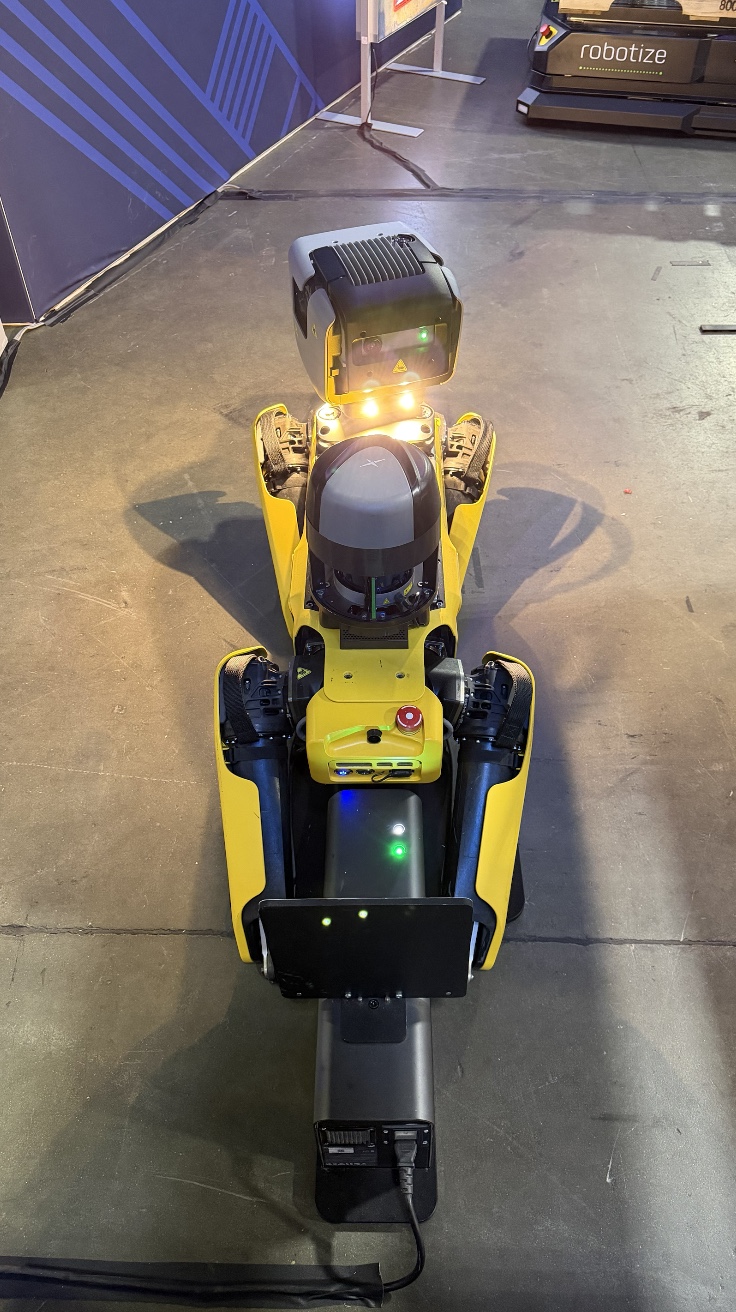
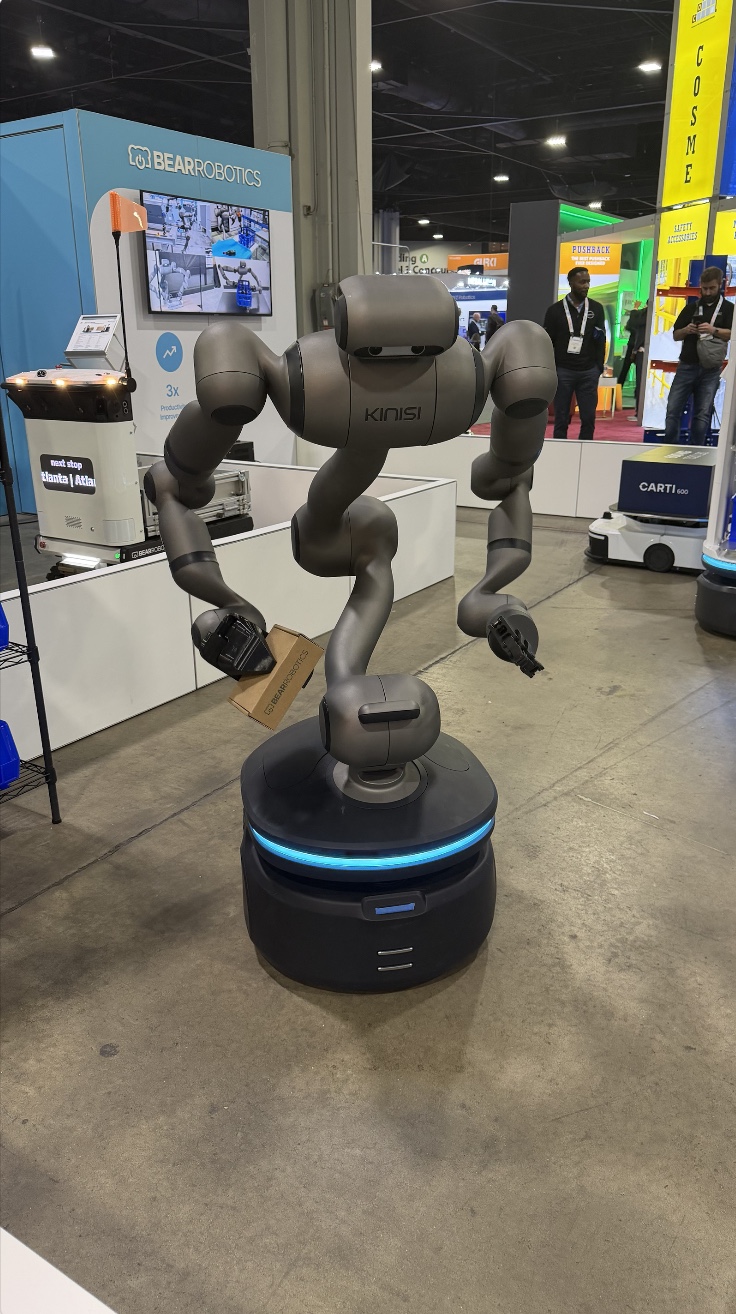
What I saw in Atlanta, across players like KNAPP, Geek+, OPEX, KUKA, LG CNS, Kardex, Agility Robotics, Boston Dynamics, Bear Robotics, MATE, Panther ID Technology, Toyota and others, was less obsession with the machine as a symbol and more focus on what the machine is actually there to do.
Not replace people.
Help them.
That distinction matters more than it sounds.
Because I do not think the most useful conversation around automation is about whether jobs disappear. That is the easiest version of the story, and probably the laziest one too. The better question is:
What kind of work are we trying to take away from people, and what kind of work are we trying to give back?
If the answer is repetitive lifting, unnecessary walking, physical strain, low-value repetition, awkward reaches, wasted motion, mental overload from badly connected systems, then yes, we should automate more of it, and faster.
Not because people matter less, but because they matter more.
That was the part I found most encouraging at MODEX. Beneath the choreography, there seemed to be a more mature understanding emerging. Technology is not interesting just because it is advanced. It becomes interesting when it removes burden. When it reduces physical wear. When it makes an operation less fragile. When it frees time and attention for things people are actually good at: judgment, problem-solving, adaptation, service, creativity.
That is a much more meaningful ambition than simply trying to prove that a robot can do something clever.
And you could feel that change in different ways across the show.
Some companies were clearly thinking in terms of systems rather than isolated gadgets. You could see it in the way software, orchestration, storage, picking, ergonomics and fleet logic were being presented as part of the same conversation. That felt important. Because real operations do not break in one dramatic moment. They break through accumulation: small inefficiencies, poor coordination, physical fatigue, bottlenecks nobody wants to own, tools that do not speak to each other, too much dependency on people doing the hard part manually.
.jpeg)
.jpeg)
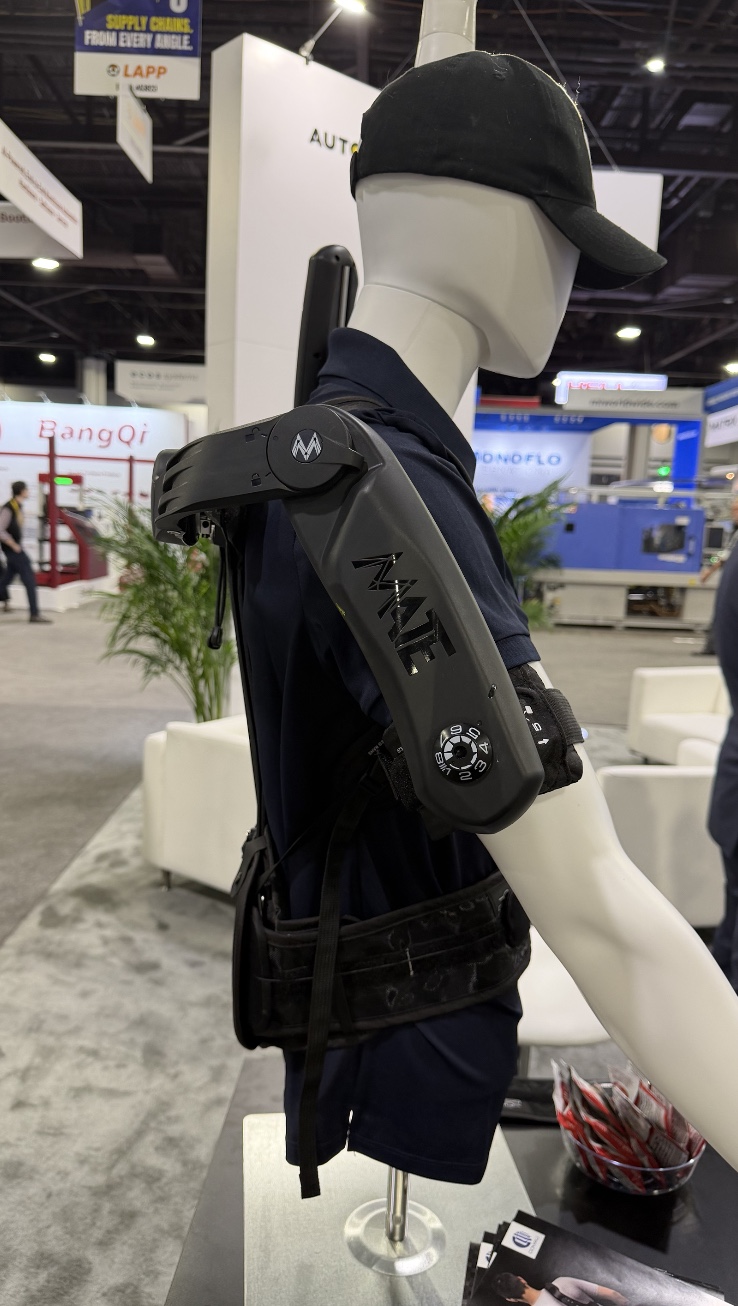
MATE stayed with me for that reason.
An exoskeleton is not the kind of thing that usually gets the most dramatic headlines. It does not have the visual charisma of a humanoid robot. But there is something very honest about a piece of technology that says: maybe the point is not to remove the worker, maybe the point is to reduce the toll the work takes on their body.
That feels like a better place to begin.
So when a company like Geek+, OPEX, KNAPP or KARDEX talks less about spectacle and more about flow, integration and daily operational logic, that is not less exciting. It is more serious. More credible. More useful.
And maybe that is what I appreciated most this year: the sense that parts of the industry are slowly moving past the phase of trying to look futuristic and are starting to focus on being genuinely helpful.
The same goes for some of the robotics that naturally attracted the crowd. Yes, humanoids and mobile robots draw attention. They always will. Agility Robotics, Boston Dynamics, Bear Robotics, all of them speak to that understandable fascination we have with machines that move through space in ways that feel almost social. But even there, what interested me was not the wow factor. It was the quiet reminder that none of these technologies really matter unless they fit into environments still shaped by human routines, human bodies and human limits.
That is where the real work is.
Not in building machines that impress from a distance, but in designing systems that make everyday work less punishing and more intelligent.
I think that is why MODEX26 felt more relevant to me than I expected.
Not because it was showing some radical new future, but because it hinted at a healthier direction. A version of automation that is not driven only by replacement, speed or cost reduction, but also by a more thoughtful idea of progress. One that accepts that some tasks should disappear, precisely so that people can do more of what machines still cannot do well.
Think better.
Decide better.
Create better.
Support better.
Adapt faster.
That is the kind of innovation I want to see more of.
Because if automation only makes work faster, that is not enough. If it only makes operations cheaper, that is not enough either. But if it can make work safer, lighter, smarter and less repetitive, then it starts to do something bigger. It starts to give people back a different kind of value: energy, attention, capacity, even dignity.
And that, for me, was the most interesting thing about Atlanta.
Not the robots themselves, impressive as many of them were.
But the growing sense that the best technology in the room was not trying to prove that humans are no longer needed. It was trying to prove that work can be designed in a better way around them.
Walking out of MODEX, I did not leave thinking about machines taking over.
I left thinking that, if we do this properly, automation could help make work more human again.

Let’s grow together!
Have questions about your next growth move?
Mormedi has answers.